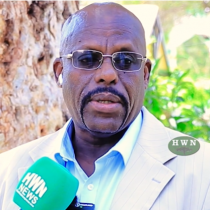
"It is a common reality that words, phrases, or partial sentences taken
|
The Somali Journalists Syndicate (SJS) expresses grave concern over the growing circulation of AI-generated deepfake content in Somalia, which poses serious risks of inciting violence, spreading hatred, and disseminating misinformation and disinformation at a time when the country faces a fragile security environment andongoing uncertaintyahead of 2026 electoral process. |
|
|
|
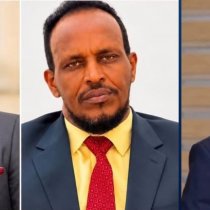
On Thursday, 18 December 2025,an audio clipfalsely purporting to be the voice of Somali Senator Abdirahman Mohamed Faroole, a former President of Puntland and currently part of the opposition coalition attendingKismayo conference, began circulating widely on Facebook, a Meta-owned platform that is popular in Somalia. |
|
|
|
The AI-generaredaudioclaimed that Senator Faroole, lasting one minute and four seconds, calls for "violence to happen in Mogadishu”. It explicitly invokes clan hostilities with a mention of regions such as Gedo, Hargeisa [Somaliland] and Laascaanood. Senator Faroole made no such remarks. |
|
|
|
After cross-checking with AI voice detection tools, the audio was confirmed to be a deepfake generated using AI voice-creation technology, manipulated from phrases taken from areal speech delivered atthe Kismayo political opposition conference, which began on 18 December. |
|
|
|
"It is a common reality that words, phrases, or partial sentences taken from a person’s speech can be trained with AI tools to create fake audio that is sometimes difficult for a general audience to detect. In this case, this is exactly how AI deepfake creators manipulated Senator Faroole’s speech,” said SJS Secretary of Information and Human Rights, Mohamed Ibrahim Bulbul. |
|
|
|
Following alerts from local journalists and digital content creators, SJS investigated the matter amid growing fears that the disinformation could damage journalists’ credibility, distort public understanding of political developments, and potentially lead to intercommunal conflict. SJS’s review found that more than 86 Facebook pages and profiles had shared the same fake audio. |
|
|
|
How Fast the AI-Generated Audio Spread |
|
|
|
A keyword-based searchconducted by SJS, within less than 24 hours after the fake audio emerged, showed that the content was viewed over 1.1 million times, shared more than 12,000 times, and received over 3,700 comments on Facebook alone, demonstrating how rapidly such harmful content can spread. |
|
|
|
As of Saturday, 20 December, the reach had increased to approximately 2 million views on Facebook alone. |
|
|
|
Alarmingly, some of the accounts amplifying the deepfake content are verified with Facebook’s blue badge and those affiliated to state media in Mogadishu which have substantial followings. |
|
|
|
As a result, on Friday, 19 December, several Somali Federal Government officials, including theMinister of Defence, and a government-backed elderrepeated the false claims from the AI-generated audio during election campaign speeches in Mogadishu, further amplifying the misinformation through local media. |
|
|
|
This is not an isolated case. SJS has observed a troubling rise in the irresponsible use of AI, including the manipulation of women’s images to falsely depict nudity, and the creation of fake voices to attribute statements to individuals that were never made. |
|
|
|
Facebook, owned by Meta, is highly popular in Somalia, and many people,including journalists, rely on it for news and information. According to Meta’s advertising resources, Facebook had approximately2.6 million usersin Somalia in early 2025. |
|
|
|
Journalists, public figures, and especially women have been increasingly targeted, with serious personal and professional consequences. Some pages even impersonate known journalists, politicians, and celebrities, further eroding trust in credible information and posing a serious threat to media freedom and public safety in Somalia. |
|
|
|
"Deepfake content, especially when spread on social media, can directly endanger communities by spreading false claims that may incite violence or unrest and can endanger journalists’ safety. It can weaken the integrity of media institutions,” said SJS Secretary General, Abdalle Mumin "What we are seeing is that untrained journalists cannot stop false narratives created with AI, leaving the public unable to distinguish facts from lies.” |
|
|
|
"In this context, SJS suggests that media professionals must be trained to identify and respond to deepfake content, and communities must be educated on the risks posed by AI-generated misinformation and disinformation,” Mr. Mumin adds. |
|
|
|
SJS calls on Meta to take immediate measures to identify, remove, and limit the spread of AI-generated misinformation and disinformation in Somalia, and to work with Somali journalists and media organizations to develop safeguards to protect the integrity of the Somali media. |
|
AFEEF:
Hadhwanaagnews marnaba masuul kama aha Aragtida dadka kale. Qoraaga ayaa xumaanteeda, xushmadeeda iyo xilkeeda sida. waxa kaliya oo Hadhwanaagmedia dhiirigalinaysaa, isdhaafsiga aragtida, canaanta gacaliyo talo wadaagga!
 HADHWANAAGNEWS