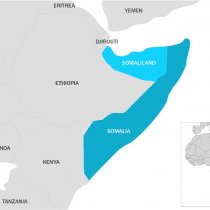
I read your article titled "Can the Nemesis of Somalia Be Its Saviour?” published on wardheernews website with great interest. Unfortunately, the argument you advance relies on a familiar and deeply flawed strategy: attempting to fragment Somaliland into feuding clan fiefdoms. This is the very same tactic repeatedly employed by successive Somali regimes in Mogadishu—and it has failed every time.
The symbolic administration proclaimed in Las Anod will not derail Somaliland’s long-standing quest for statehood. If anything, the people of eastern Sool risk being left behind while the rest of Somaliland continues to move forward politically, economically, and institutionally.
Somaliland’s current policy toward eastern Sool—particularly the Dhulbahante clans—is deliberate and pragmatic: leave them alone and allow them to decide, in their own time, whether and when to rejoin Somaliland. Somaliland will continue to move forward regardless, but with the Dhulbahante clans fully on board, Somaliland will achieve something far greater—lasting peace, deeper unity, and shared prosperity. This is why patience is not a weakness but a strategic choice. If it takes another 30 years for the Dhulbahante clans to embrace Somaliland, so be it.
In the meantime, the focus remains on rebuilding and expanding the economy in the Caynabo area. Economic gravity, not coercion, will ultimately shape outcomes. As you know, people routinely risk their lives crossing dangerous seas and distant borders in search of economic opportunity. The people of eastern Sool face no such peril. Reaching Caynabo or the rest of Somaliland requires no smugglers, no boats, and no risk—only a few hours’ drive across their own land. When jobs, factories, and livelihoods emerge in Caynabo, people will move naturally, voluntarily, and peacefully.
It is also worth noting that, even without widespread international recognition, Somaliland enjoys backing from two influential states: the UAE (albeit quietly) and Israel. In the coming years, Somaliland’s armed forces and security institutions are likely to receive advanced training and capacity-building support, creating a credible deterrent against any aggression.
Somaliland’s strategy is therefore clear: allow local grievances to cool, prioritize economic growth, and strengthen security. If 100 factories are built in Caynabo, the resulting demand for labor will naturally draw people from Las Anod and surrounding areas. Economic integration will succeed where militarization has always failed.
In the end, it is the economy—not tanks or human killing machines—that dictates the future.
 HADHWANAAGNEWS