The State That Preceded Recognition .
By: Ali Bihi
In a world governed by interests rather than principles,
where chaos is rewarded with recognition,
and successful experiments are punished with neglect,
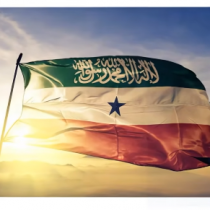
the Republic of Somaliland emerges as a politically exceptional case,
an uncomfortable reminder of the contradictions within the international system.
On May 18, 1991, Somaliland declared the restoration of its sovereignty
after the collapse of Somalia’s central government and the fall of Mohamed Siad Barre’s regime.
This declaration was not the result of a military coup or foreign intervention,
but the outcome of clan conferences and internal reconciliation,
most notably the Burao Conference (1991) and the Borama Conference (1993),
where the foundations of the state and its institutions were laid.
More than 34 years later, Somaliland remains outside the framework of international recognition ,
a paradox that raises a fundamental question:
Is international recognition a reward for stability,
or a political tool granted and withheld according to interests?
A De Facto State
Somaliland is not a theoretical entity;
it is a functioning state by the practical standards of international law:
- A constitution approved by a popular referendum in 2001 with over 97% support.
- Free and fair presidential, parliamentary, and municipal elections
(2003, 2010, 2017, 2021, 2024).
- Peaceful transfer of power—rare in the Horn of Africa.
- A national currency (the Somaliland Shilling),
a central bank,
and local security forces.
In contrast,
the internationally recognized Federal Republic of Somalia has struggled with:
- Lack of control over its full territory.
- Persistent threats from Al‑Shabaab, affiliated with Al‑Qaeda.
- Heavy dependence on African Union forces (ATMIS) since 2007.
Africa’s Dilemma: Fear of a Secession Precedent
One of the main reasons for ignoring Somaliland is the African Union’s insistence on the principle of "the sanctity of colonial borders,”
adopted in 1964 by the Organization of African Unity.
But this position overlooks a crucial historical fact:
Somaliland was an independent, sovereign state on June 26, 1960.
It was recognized by more than 35 countries, including:
the United Kingdom, Egypt, Israel, Ethiopia, and France.
Its union with Somalia on July 1, 1960 was voluntary,
and it failed politically and legally.
Israel’s Interest: Pragmatism, Not Slogans
The idea of relations between Somaliland and Israel triggers political and media sensitivity, despite the fact that:
More than six Arab countries have official relations with Israel
(Egypt 1979, Jordan 1994, UAE and Bahrain 2020, Morocco and Sudan later).
Somaliland’s potential recognition of Israel and vice versa,
is driven by strategic interests, not symbolism.
Israel’s interest in Somaliland is rooted in:
- Its strategic location near the Bab al‑Mandab Strait.
- Maritime security in the Red Sea.
- Regional competition involving Turkey, Iran, Israel, and Gulf states in the Horn of Africa.
Countries That Engage With Somaliland Without Recognition
Despite the absence of formal recognition, several states deal directly with Somaliland:
- United Kingdom (historic ties and a representation office).
- Ethiopia (security and trade cooperation, MoUs).
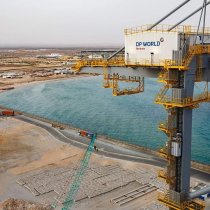
- United Arab Emirates (investment in Berbera Port via DP World).
- Taiwan (mutual representative offices since 2020).
- United States and the European Union (security cooperation and development programs).
This reflects a form of implicit recognition of reality,
contrasted with formal legal denial.
A Model That Embarrasses the International Community
What major powers fear is not Somaliland itself,
but the model it represents:
A state built without peacekeepers,
without UN trusteeship,
and without billions in international aid.
This model raises uncomfortable questions about the failure of global "state‑building” projects elsewhere.
Conclusion:
Ignoring Somaliland is not a legal issue;
it is a political decision shaped by regional and international calculations.
A state that built itself from within,
achieving security and democracy with limited resources,
poses a challenge to the dominant international narrative.
Recognition may be delayed,
but history shows that legitimacy created by a people
is stronger than recognition granted by states.
Somaliland,
whether others accept it or not
is a functioning state,
awaiting only a moment of international honesty.
And Somaliland will endure,
whether the world recognizes it today or tomorrow,
because it is a state built by its people,
not by international decrees.
History proves that recognition may be delayed,
but reality cannot be denied forever.
By: Ali Bihi
 HADHWANAAGNEWS